
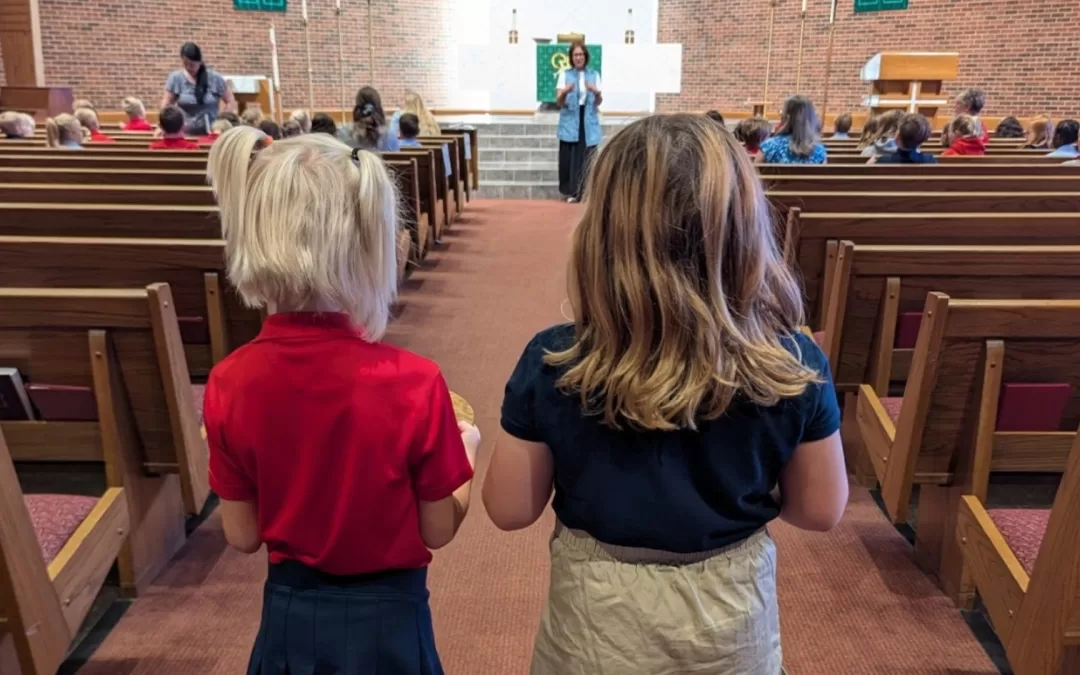
Every spring, families across Johnson County face one of the most consequential decisions of their child’s education: whether to stay with the public school system or choose a private school for the following year. It is not a simple question. For most families, it involves weighing cost, academic quality, class size, values alignment, and the very real fear of making the wrong call. If you have been searching for answers about private school versus public school in the Kansas City area, or trying to figure out whether a small Christian school like Hope Lutheran in Shawnee, KS is the right fit for your family, this guide is written for you.
Quick Summary
- Research consistently shows that smaller class sizes lead to better academic outcomes, particularly in the early and middle grades.
- Private schools in Johnson County offer personalized instruction, faith integration, and closer teacher-student relationships that large public schools often cannot match structurally.
- Hope Lutheran School in Shawnee, KS maintains class sizes of 15 to the low 20s, with teachers averaging 20 years of experience and 75% holding master’s degrees.
- Choosing a private school is not just about academics. It is about finding the environment where your child can grow as a whole person.
- Contact Hope Lutheran School to schedule a tour, or visit our admissions and enrollment page to learn more.
The Question Families Are Really Asking
When parents search “is private school worth it” or “private school vs. public school Kansas City,” they are rarely asking a purely academic question. They are asking something more personal: will my child thrive? Will they be known, challenged, and cared for? Will the values they are learning at home be reinforced at school, or undermined by it?
Those are fair and important questions. The research can help answer some of them, and honest experience can answer the rest. What follows is both.
What the Research Says About Small Class Sizes
The relationship between class size and student outcomes has been studied extensively. The most cited and rigorous study is the Tennessee STAR project, a randomized controlled trial that followed more than 11,000 students from kindergarten through 3rd grade. It found that students in smaller classes of 13 to 17 students significantly outperformed peers in larger classes, and that those gains persisted into high school (Project STAR, Vanderbilt University).
The benefits are not limited to early elementary. A landmark study published by economist Alan Krueger in the Quarterly Journal of Economics confirmed that smaller classes during the K-3 years produced long-term advantages in test scores, graduation rates, and future earnings (Krueger, QJE, 1999, Princeton University).
More recently, the National Education Policy Center found that high-poverty and high-need students benefit most dramatically from small class environments, but that students at all income levels show improved engagement and achievement when they have more direct teacher access (National Education Policy Center).
What does this mean practically? A child in a class of 28 to 32 students, which is typical in many Johnson County public school settings, will receive meaningfully less individual attention than a child in a class of 15 to 20. That gap compounds over time.
Small Private School vs. Large Public School: What Actually Changes
It is worth being specific about what changes in a smaller school environment, because the difference is not just numerical.
Teacher-student relationships deepen.
When a teacher has 16 students instead of 30, they can track individual progress, recognize when a student is struggling before that struggle becomes a crisis, and adapt their instruction to different learning styles. At Hope Lutheran, teachers are expected to form close, trusting relationships with both students and families. That is not a marketing phrase. It is a structural reality made possible by the class size.
Accountability increases, in a good way.
In a smaller school, students are known. Their teachers know their strengths, their quirks, and their areas for growth. That kind of visibility raises expectations in the best sense. Students cannot slip through unnoticed, and they also cannot be overlooked.
The pace of instruction is more flexible.
When a teacher has fewer students, they can move more slowly through a concept that needs more time, or accelerate when the class is ready. Rigid pacing guides, which are common in large public school systems, are driven largely by the logistical demands of managing many students across many classrooms. Smaller schools have more room to respond to what the students actually need.
Community is real.
In a school of hundreds or thousands of students, belonging can feel accidental. In a school like Hope Lutheran, with its K-8 structure and small class sizes, students genuinely know each other across grade levels. Older students are visible role models. Younger students have a sense of where they are headed. That continuity matters for social development, especially during the middle school years when peer belonging becomes particularly significant.
What Sets Hope Lutheran Apart Among Private Schools in Johnson County
Johnson County has private school options across a spectrum, from Catholic schools to non-denominational Christian academies to independent college-prep programs. Choosing among them requires knowing what matters most to your family. Here is what distinguishes Hope Lutheran in Shawnee, KS specifically.
Experienced, Credentialed Faculty
Hope Lutheran’s teachers are credentialed with the State of Kansas, and most hold Lutheran Teacher certification as well. Seventy-five percent hold master’s degrees. The average length of teaching experience among the faculty is 20 years, a figure that is genuinely rare. In an era when teacher turnover has become a significant problem in both public and private education (Learning Policy Institute on Teacher Turnover), a school where experienced teachers stay and build lasting relationships with families is a meaningful differentiator.
All teachers at Hope Lutheran are practicing Christians who view their work as a calling, not simply a career. That shared conviction shapes classroom culture in ways that go beyond curriculum.
Faith Woven Into Every Subject
Lutheran education is not about relegating faith to a chapel period once a week. At Hope Lutheran, the Christian worldview is integrated into every subject throughout the school day. Students worship together in weekly chapel services. Scripture is memorized and applied. Major Christian celebrations like Christmas and Easter are observed in their full theological meaning.
For families who are actively practicing their Christian faith, this kind of integration is not incidental. It is the whole point. Research from the Association of Christian Schools International has found that students in faith-integrated academic environments show stronger character development outcomes and greater long-term engagement with their communities (ACSI Research).
A STEM Program With Real Differentiators
Hope Lutheran’s STEM program includes features that no public school in Shawnee or Overland Park offers: a certified monarch butterfly waystation maintained by 6th and 7th graders, both an indoor and outdoor beehive where students work with a local beekeeper partner, a honey harvest program where students bottle and sell honey and donate half the proceeds to a charity they choose, and technology integration that begins in kindergarten with robotics, coding, and 3D design building progressively through 8th grade.
These are not supplemental enrichment activities. They are core parts of how the school teaches science, technology, and stewardship together.
Extracurricular Depth in a Small School Setting
One concern parents sometimes raise about small private schools is whether they can offer the same range of extracurricular activities as a larger school. At Hope Lutheran, the answer is yes. The extracurricular program includes band for 4th through 8th grade, Math Club with regional competition participation, Student Council with elected officers from 4th through 8th grade, scouting programs for boys and girls, a Spring Play for middle school students, and more.
Because the school is small, students who want to participate generally can. There is no cut line for most activities. Every student who joins the band joins the band. That accessibility is another underrated benefit of the small school model.
Common Concerns About Private School, Addressed Honestly
“Is private school actually better academically?”
The honest answer is: it depends on the school, and it depends on the student. Research from the National Center for Education Statistics has found that private school students on average perform at higher levels on national assessments than their public school peers, after accounting for demographic factors (NCES Private School Statistics). But averages mask a great deal of variation. A strong private school with experienced teachers, small classes, and a coherent curriculum will outperform a weak one regardless of its label.
The better question is not “is private school better?” but “is this particular school the right environment for my particular child?”
“Can we afford it?”
Tuition is a real consideration, and the right school for your family is one you can sustain long-term without financial strain. Hope Lutheran School’s admissions and enrollment page outlines tuition and financial aid options. The school does offer tuition assistance, and families are encouraged to inquire directly about what options are available.
It is also worth noting that private school tuition, particularly at smaller schools, is often more moderate than families expect. Comparing the total cost, including what families pay in taxes toward public school systems, is a more complete way to evaluate the financial picture.
“Will my child miss out on diversity of experience?”
This is a thoughtful concern. Hope Lutheran School serves a diverse student body and is authorized under federal law to enroll international students. The school believes that its small, faith-centered community actually deepens students’ exposure to genuine human diversity because relationships are not superficial. Students learn alongside and from one another in a setting that values every person as created in God’s image.
“What if my child has specific learning needs?”
Smaller class sizes are particularly beneficial for students with learning differences, because teachers can differentiate instruction more readily. Families with specific questions about learning support at Hope Lutheran are encouraged to reach out directly to discuss their child’s individual needs.
How to Evaluate Whether a Small Private School Is the Right Fit
No blog post can make this decision for your family. But these questions can help clarify your priorities:
- Does your child need more individualized attention than a large classroom can provide?
- Is faith integration in daily education important to your family’s values?
- Do you want a school environment where teachers and administrators know your child by name and notice when something is off?
- Are you looking for a K-8 experience that builds community and continuity over time, rather than transitioning between buildings every few years?
- Do you want STEM, arts, and extracurricular opportunities that are genuinely accessible to your child, not reserved for the students who make a competitive cut?
If most of those answers are yes, a small Christian private school like Hope Lutheran is worth a serious look.
Frequently Asked Questions
How does Hope Lutheran School’s class size compare to Johnson County public schools?
Hope Lutheran maintains class sizes of no more than 20 students in Kindergarten and no more than 25 in grades 1 through 8, with typical class sizes ranging from 15 to the low 20s. By comparison, average class sizes in Johnson County public schools often range from 22 to 30 students or more, depending on the grade and school. The difference in individual teacher attention is significant.
Is Hope Lutheran School accredited?
Yes. Hope Lutheran School has completed the Cognia accreditation process and follows Kansas State College Readiness Standards in all curricular areas, meeting or exceeding them. Core teachers are credentialed with the State of Kansas, and most hold Lutheran Teacher certification.
Do I have to be Lutheran to enroll my child at Hope Lutheran School?
No. Hope Lutheran School welcomes families from a variety of Christian backgrounds. The school is grounded in Lutheran theology and integrates Christian faith throughout the curriculum, but enrollment is not limited to Lutheran families.
What grades does Hope Lutheran serve?
Hope Lutheran School serves students from Kindergarten through 8th grade, providing a continuous K-8 experience that allows students to build lasting relationships with teachers and peers over many years.
How do I schedule a tour?
You can reach the admissions team directly through the contact page or visit the enrollment page for more information on the admissions process.
The Right School Changes Everything
The decision to choose a private school is not about prestige or rejecting public education. It is about finding the environment where your child will be known, challenged, and cared for in a way that aligns with your family’s values. For many Johnson County families, that environment is a small, faith-centered school where teachers stay long enough to truly invest, where class sizes allow for genuine relationships, and where learning is understood as preparation not just for college but for a life of purpose.
Hope Lutheran School in Shawnee, KS has been building that environment for families in the greater Kansas City area for years. If it sounds like what you have been looking for, we would love to meet you.Contact us to schedule a visit, or explore our frequently asked questions to learn more about what life at Hope Lutheran looks like.