
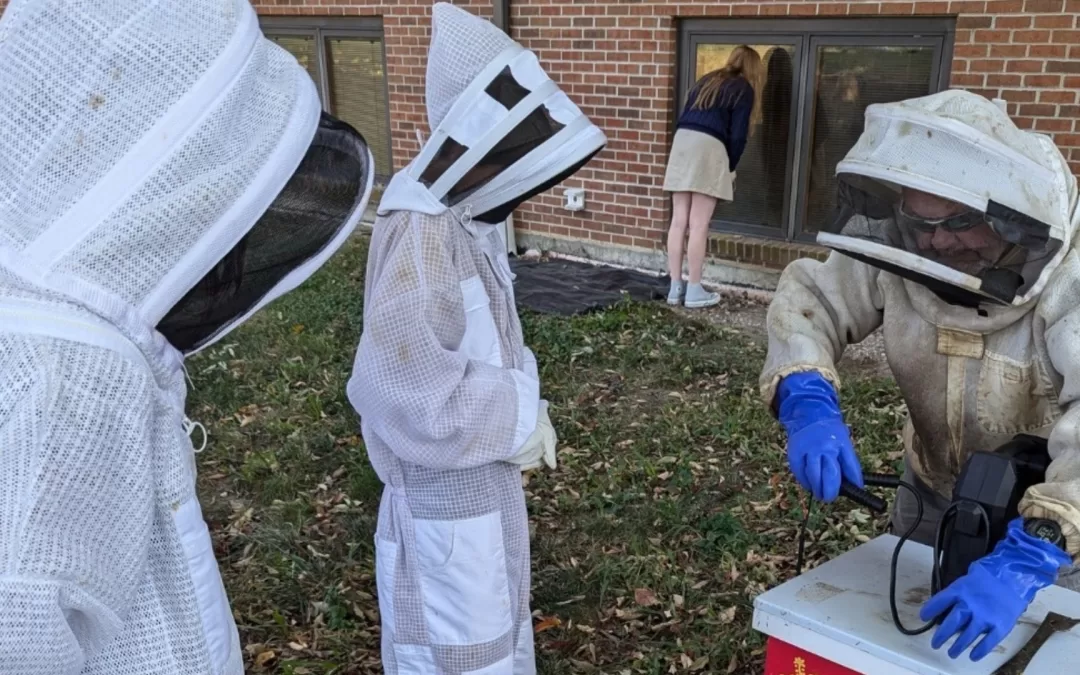
When parents research STEM programs for their children, they often picture computer labs, coding modules, and robotics kits. Those things matter, and Hope Lutheran School has them. But at Hope Lutheran, hands-on STEM learning goes far beyond a screen. It involves tending to a living monarch butterfly waystation, suiting up to work beside a real beekeeper, bottling honey to donate to charity, and learning to code through storytelling and engineering challenges that connect directly to real-world problems. This is Christian STEM education in Shawnee, KS, and it looks unlike anything offered in the standard classroom down the street.
Quick Summary
- Hope Lutheran School offers hands-on STEM experiences that no public school or typical private school in the Kansas City area replicates, including a certified monarch butterfly waystation and both indoor and outdoor beehives.
- Technology integration begins in kindergarten and builds progressively through 8th grade, covering robotics, coding, 3D design, and project-based learning.
- Faith is woven into STEM at every grade level, reflecting the school’s mission to develop the whole child.
- Students in the beekeeping program harvest, bottle, and sell honey, then donate half the proceeds to a charity of their choice.
- Learn more about the STEM program at Hope Lutheran or contact us to schedule a visit.
Why Hands-On STEM Matters More Than Ever
The research on experiential learning is clear. Students retain information more effectively when they learn by doing rather than by observing. According to the National Training Laboratories, people retain approximately 75% of what they learn through practice compared to just 5% of what they hear in a traditional lecture format (National Training Laboratories Learning Pyramid). This is not just a trend in education theory. It is increasingly what parents in Johnson County are looking for when they evaluate private school options in the Kansas City area.
What separates a hands-on STEM program from one that simply teaches about science is the difference between reading about pollination and actually managing a beehive. Between hearing about ecosystems and maintaining a certified monarch waystation through a partnership with real Master Gardeners. That distinction is exactly what Hope Lutheran School has built into its curriculum, from kindergarten through 8th grade.
Faith-based STEM education adds another dimension entirely. When students understand themselves as stewards of creation, science becomes more than a subject. It becomes a calling. At Hope Lutheran, teachers integrate that perspective into every level of the STEM program, reinforcing the school’s mission of building lives of excellence upon the foundation of Christ.
A Closer Look at STEM at Hope Lutheran School
Technology Integration That Begins in Kindergarten
Most schools introduce technology in the middle grades. At Hope Lutheran, it starts on day one. The school’s approach to technology is intentional and sequential, meaning each grade builds on the skills developed the year before.
Here is a snapshot of how technology is integrated grade by grade:
- Kindergarten: Students begin touch typing and keyboarding, building a foundation for digital fluency.
- 1st Grade: Students prepare and present a Google Slides presentation on the articles of the Lord’s Prayer, combining faith and digital communication skills from the earliest grades.
- 2nd Grade: Students work with Kibo Robots in science and math lessons, introducing programming logic through hands-on play.
- 3rd Grade: Students advance to VexGo robots and begin using Scratch Jr. through code.org to program original stories.
- 4th Grade: Students use Minecraft to simulate settings from a Bible story or a country they are studying, combining spatial reasoning with narrative and cross-curricular content.
- 5th Grade: Students use Microbits to combine code and circuitry, building functional gadgets and gaining an introduction to physical computing.
- 6th through 8th Grade: Students apply their accumulated skills to real-world projects, including the butterfly waystation and beehive programs. They choose the right digital tool for each task, whether that is a budget in Google Sheets, a research presentation in Google Slides, or outreach content in Canva.
Across 3rd through 5th grade, students also complete basic 3D design projects using Tinkercad, and use Scratch programming through code.org to build stories and presentations. These are the same tools used in many high school and introductory college engineering courses (code.org, Tinkercad by Autodesk).
This sequenced approach means students arrive at middle school with genuine digital skills, not just familiarity with a few apps.
The Butterfly Garden: A Certified Monarch Waystation
Hope Lutheran School’s 6th and 7th graders maintain a certified monarch waystation on campus. This is not a decorative garden. It is a functioning habitat that supports monarch butterfly populations as part of a larger conservation effort coordinated by Monarch Watch (Monarch Watch Waystation Program).
Students in these grades manage the waystation through the school year, learning about pollinator ecosystems, native plant species, and the relationship between habitat loss and species decline. They also connect with the Johnson County K-State Extension Master Gardener’s program, bringing adult mentors and horticultural expertise directly into the learning experience.
The ecological and academic value of this program is significant. Research published in the journal Environment and Behavior has found that students who participate in outdoor, nature-based learning show improved engagement, stronger science comprehension, and better long-term retention of ecological concepts (Environment and Behavior, SAGE Journals). At Hope Lutheran, those outcomes are paired with a theological understanding of creation care, grounding the science in a larger purpose.
The Beehive Program: From Hive to Honey to Charity
Perhaps no program at Hope Lutheran School is more distinctive than its beehive experience. The school operates both an indoor and an outdoor beehive, giving 7th and 8th graders direct access to live pollinators under safe, supervised conditions.
The indoor beehive allows students to observe colony behavior, comb structure, and pollinator biology up close throughout the school year. The outdoor hive takes things further. Hope Lutheran partners with a local beekeeper who visits campus to work alongside students. Two student bee suits are available, and students take turns participating in hive inspections and honey harvests.
What happens next is where the program becomes something genuinely special. Students bottle the harvested honey themselves. They sell it. And then they donate half of the proceeds to a charity of their own choosing. Past recipients have included Paws for Autism and Braden’s Hope, a local organization supporting children with cancer. The other half of the proceeds goes back into sustaining the program.
This model teaches students biology, entrepreneurship, community stewardship, and generosity in a single integrated experience. It is the kind of learning that stays with a student long after graduation. Research from the Journal of Youth and Adolescence confirms that service-learning programs tied to academic content significantly increase students’ sense of civic engagement and personal responsibility (Journal of Youth and Adolescence).
From a faith perspective, it also reflects a core Lutheran teaching: that we are called to serve our neighbors, not just to learn about the world, but to act within it.
Academic Fair: Student-Directed Learning
The school participates in extended research projects that culminate in an annual Academic Fair, where students present original work to the wider school community. This mirrors the format of regional and national science fair competitions and gives students early experience with academic presentation and peer review.
Additionally, Hope Lutheran maintains a partnership with Kansas Corn STEM, bringing real agricultural science into the classroom and connecting students with the broader Kansas farming and food systems community.
Faith and STEM: A Natural Pairing
One of the most common questions Christian parents ask when evaluating STEM programs is how science and faith coexist in the classroom. At Hope Lutheran, there is no tension between the two. Both are grounded in the same conviction: that God created a world worth understanding, exploring, and caring for.
Teachers at Hope Lutheran hold both academic and Lutheran Teacher certifications, with 75% holding master’s degrees and an average of 20 years of teaching experience. They are not just subject-matter experts. They are believers who see their work in the classroom as a calling. That perspective shapes how science is taught, not by avoiding difficult questions, but by meeting them with both intellectual rigor and faith.
When a 7th grader suits up to check on the outdoor beehive, the lesson is not just about apiary science. It is also about what it means to be a faithful steward of creation, a concept rooted in Genesis 2 and lived out in the schoolyard.
Extracurricular STEM Opportunities
The extracurricular program at Hope Lutheran extends STEM learning beyond the classroom. Math Club is available to students in grades 4 through 8 and meets weekly, with participation in regional Mathletics competitions throughout the year. Student Council, scouting programs, and spring theater all reinforce collaboration, problem-solving, and leadership skills that complement academic STEM learning.
These programs contribute to what research from the American Educational Research Association describes as the full-development model of schooling, where academic and co-curricular experiences work together to develop capable, engaged citizens (American Educational Research Association).
Frequently Asked Questions
What grades are involved in the beehive program at Hope Lutheran School?
The indoor beehive program is available to 7th and 8th grade students. The outdoor beehive, where students work alongside a local beekeeper partner to harvest honey, also involves students in those upper middle school grades. The honey is bottled and sold, with half the proceeds donated to a student-chosen charity each year.
What is a certified monarch waystation and how does it fit into the curriculum?
A certified monarch waystation is a garden habitat registered with Monarch Watch that provides food and shelter for monarch butterflies during their migration. Hope Lutheran’s 6th and 7th graders maintain the school’s waystation as part of their STEM curriculum, learning about pollinator ecosystems, native plants, and conservation in a hands-on outdoor setting.
Does Hope Lutheran’s STEM program include coding and robotics?
Yes. The school’s technology integration begins in kindergarten with keyboarding and progresses through Scratch Jr. and Scratch programming, VexGo and Kibo robotics, Microbits, Tinkercad 3D design, and Google Workspace tools. By the time students reach middle school, they have years of applied technology experience.
How does faith connect to the STEM program?
Faith is not a separate layer added on top of STEM at Hope Lutheran. It is woven throughout. Teachers who hold both academic credentials and Lutheran Teacher certifications approach science as stewardship, understanding the natural world as something God created and called us to tend. Student projects like the beehive’s charity component reflect the school’s broader commitment to serving neighbors.
Is Hope Lutheran’s STEM program accredited?
Hope Lutheran School has completed the Cognia accreditation process and follows Kansas State College Readiness Standards in all curricular areas, meeting or exceeding them.
Discover What Hands-On STEM Looks Like at Hope Lutheran
If you are a Johnson County family looking for a private school in the Kansas City area where your child can learn coding, work alongside real beekeepers, maintain a butterfly habitat, and grow in faith, Hope Lutheran School in Shawnee, KS is worth a closer look. Small class sizes ranging from 15 to the low 20s mean your child will never get lost in the crowd, and teachers who average 20 years of experience bring both depth of knowledge and genuine care to every lesson.
Explore the STEM program or reach out to our admissions team to schedule a tour. We would love to show you what learning looks like at Hope Lutheran.